


Short answer: yes. The large majority of gas-heated homes in Dublin can be changed over to a heat pump, and plenty already have been. What people don’t always expect is how different the job is to a normal boiler replacement. Swapping one gas boiler for another is usually a day’s work. Going from gas to a heat pump means looking at the whole house, and that takes more planning.
It comes down to how each system heats your home. A gas boiler burns fuel and sends very hot water around the radiators, so it can cope with a house that leaks heat by simply burning more gas to make up the difference. A heat pump runs at a lower temperature for longer, and it relies on the house keeping hold of the heat it puts in. Pretty much everything in this article follows on from that.
Below we go through each part of the switch in roughly the order it happens, starting with insulation and finishing with the grants and what it all costs.
Table of Contents
- Why it isn’t a straight swap
- Start with the insulation
- The heat loss assessment
- Will your existing radiators work?
- Hot water and the combi boiler question
- The electrical side
- Finding a spot for the outdoor unit
- What happens to the gas?
- Grants for switching from a gas boiler
- What does it cost to switch?
- When it might not be the right time
- How the switch works with NRM
- Quick FAQ
Why it isn’t a straight swap
With a like-for-like boiler replacement, the new boiler normally goes back on the same wall and connects into the pipes and radiators that are already there. Nothing else in the house really changes.
A heat pump is a different animal. Most gas systems send water to the radiators at around 70°C, whereas a heat pump does its best work somewhere between 35 and 50°C. At those lower temperatures, a well-designed system can produce three or more units of heat for every unit of electricity it uses. Push it up to gas boiler temperatures, and the efficiency falls off fairly quickly, along with any savings on your bills.
In practice, that means the house has to be set up to be heated gently. The heat needs to stay in, the radiators need to be big enough to warm the rooms at a lower temperature, and there has to be a cylinder for the hot water. There’s nothing unusual about any of that, but it does need to be planned out before any equipment is ordered.

Heat Pump vs Gas Boiler – Start with the insulation
If there’s one part of the process homeowners are tempted to skip, it’s this one, and it happens to be the part that makes the biggest difference to how well a heat pump performs.
A heat pump in a poorly insulated house will still heat it, but it will spend a lot of its time working flat out. Your electricity bills will be higher than they should be, and some rooms may never get properly warm. If the money goes into the fabric of the house first, the heat pump can be smaller, it costs less to run, and the house is a lot more comfortable to live in.
When we look at a house, the attic is usually the first thing we check. In a lot of older homes, the insulation up there has been squashed down over the years or was never very deep to begin with, and topping it up is one of the cheaper jobs on the list. Walls come next. Cavity walls can normally be pumped, while solid walls need either internal drylining or an external wrap, which is a bigger and more expensive piece of work. We also look at windows and doors, especially old single glazing or early double glazing that has lost its seal, and at draughts coming from attic hatches, open chimneys and gaps around old pipework.
SEAI has separate grants for most of these upgrades, so the cost of getting the house ready isn’t all on you.
Heat Pump Heating System – The heat loss assessment
To get the heat pump grant, SEAI needs to see that your home holds its heat well enough. This is measured using the Heat Loss Indicator (HLI), and the figure has to be 2.3 W/K·m² or lower.
What you need to show depends on the age of the house. If it was built before 2007, you’ll need a technical assessment from an SEAI-registered technical advisor, unless you already have a valid BER showing an HLI of 2.3 or less. SEAI gives a €200 grant towards the cost of the assessment. Houses built from 2007 onwards don’t need one, because they were built to a standard that should already meet the requirement, although you can still have one done if you want the reassurance. In every case, the house must have been built and occupied before 2021.
The technical assessment and your installer’s own heat loss calculation are two different things, and people often mix them up. The assessment confirms whether the house is ready for a heat pump and lists any work that needs doing first. The installer’s calculation goes room by room and works out how much heat each one needs on a cold winter’s day, and that is what the heat pump and the radiators should be sized from. If you’re handed a quote and nobody has measured up the rooms, ask how they arrived at the size of the unit.
Will your existing radiators work?
In some cases, yes, but it’s rare for every radiator in a house to be suitable.
The radiators you have now were picked to suit a gas boiler running at high temperatures. When cooler water goes through them they give out less heat, so a room that’s perfectly comfortable on gas can come up a couple of degrees short with a heat pump. The fix is either a larger radiator in that room or cutting down how much heat the room loses, which is another reason the insulation matters so much.
Pipework is the other thing we check. A lot of Irish houses from the 1970s and 1980s were plumbed in microbore, the thin 8mm or 10mm copper pipe you’ll often see coming up through the floor to a radiator. Heat pumps need more water moving around the system than a boiler does, and pipes that narrow can restrict it. That doesn’t always mean replumbing the whole house, but it has to be looked at properly during the survey.
For this reason, all of our heat pump packages at NRM include new aluminium radiators or underfloor heating, sized for each room so the system works properly at heat pump temperatures. The €2,000 SEAI central heating grant goes towards this part of the job.

Hot water and the combi boiler question – Gas Boiler Replacement
This one catches out a lot of people coming from gas.
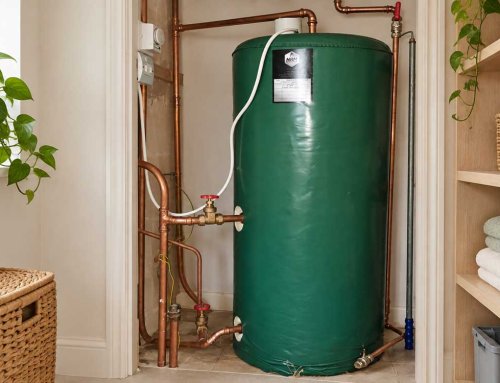
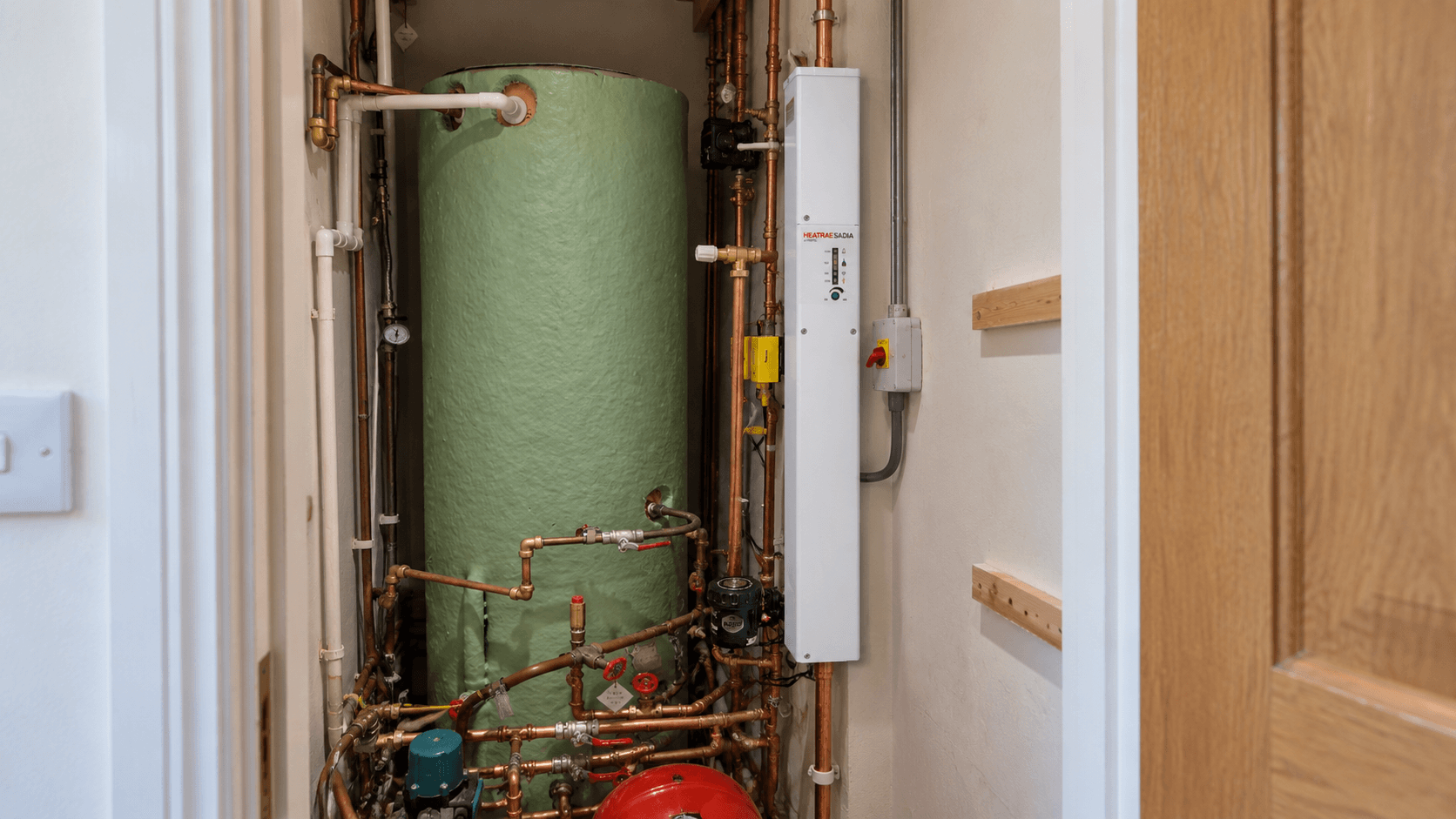
If your house has a combi boiler, you probably don’t have a hot water cylinder anymore, because a combi heats water instantly when you turn on a tap. Heat pumps don’t work that way. They heat and store water in a tank, so you’ll need room for a cylinder.
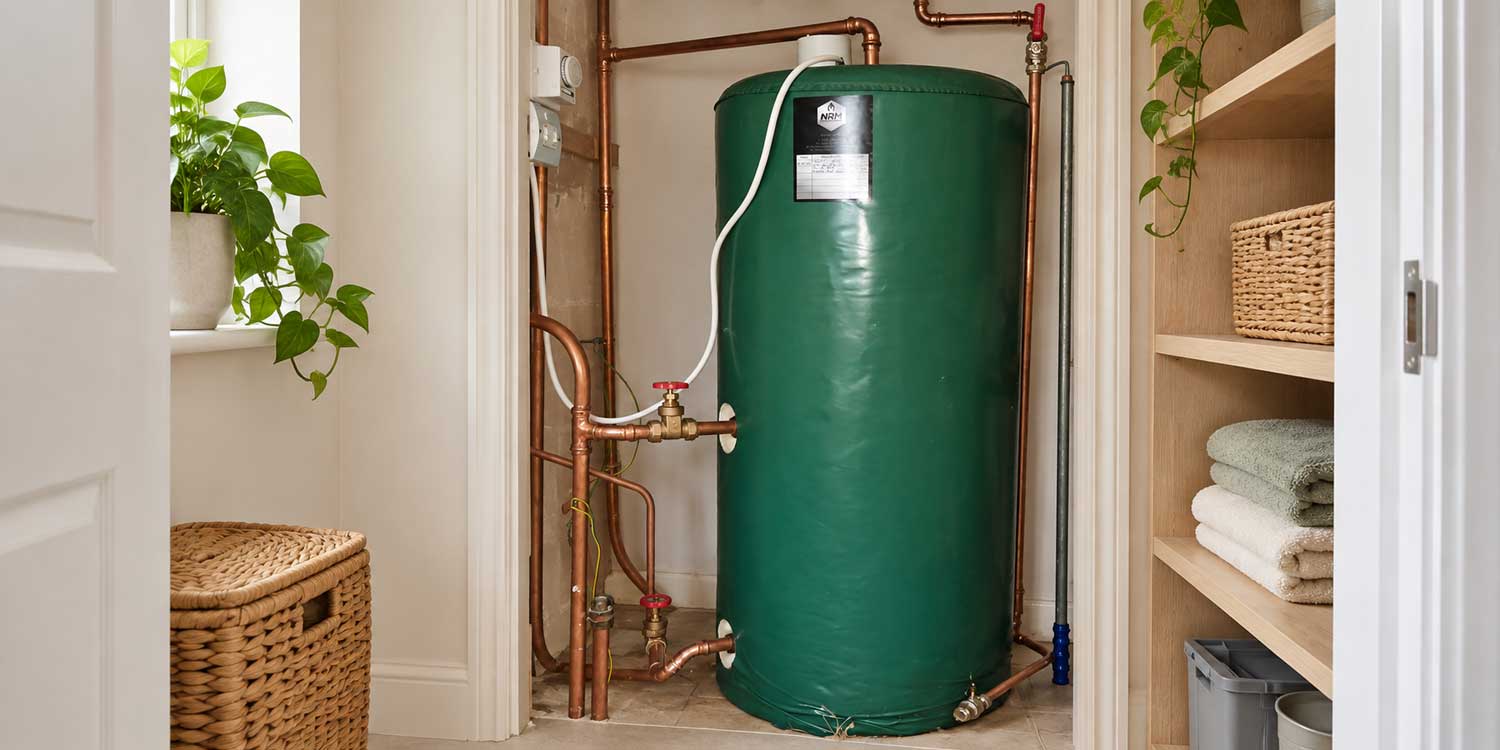
In a typical family home that means a cylinder of somewhere between 200 and 300 litres, which takes up roughly the floor space of a narrow wardrobe. If you still have a hot press, that’s normally where it goes. If the hot press was taken out when the combi went in, we’ll look for space in a utility room, under the stairs or in another spare corner of the house.
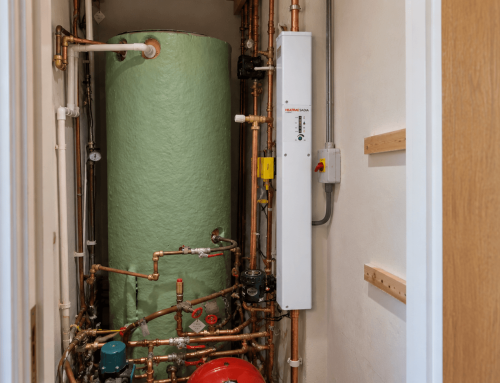
If you do still have a cylinder from an older system, it most likely won’t be suitable. Cylinders made for heat pumps have a much larger coil inside than the ones designed for gas boilers, so in most cases the old one is replaced. You can read more about this on our hot water cylinder replacement page.
The system will also heat the cylinder to a higher temperature every so often, usually once a week, to prevent Legionella. This is standard and gets set up when we commission the system.
The electrical side
Because a heat pump runs on electricity, it needs its own dedicated circuit from the fuse board. The incoming electricity supply in most houses is fine for this. Older fuse boards can be a different story, though, particularly original boards or ones that have had extra circuits added over the years, and these sometimes need to be upgraded.
All electrical work has to be done and certified by a registered electrician. We check the board during the survey so that if an upgrade is needed, it’s included in your quote from the start.
Finding a spot for the outdoor unit
An air-to-water heat pump has an outdoor unit that looks similar to a large air conditioning unit. Where it goes affects how efficiently it runs and how much you and your neighbours notice it.
The unit needs plenty of free air around it, so squeezing it into a tight corner or behind a fence isn’t a good idea. We try to keep it close to the house so the pipe run is short, and it needs a solid, level base, either a concrete plinth or a suitable wall bracket. Heat pumps also give off water while they run and when they defrost, so it has to drain away properly and shouldn’t drip onto a footpath where it could freeze in winter. We also keep it a sensible distance from bedroom windows, both yours and next door’s.
Most homes don’t need planning permission for an air-to-water heat pump, but the exemption has conditions attached. The unit can’t go on the front of the house; it has to be at least 50cm from the edge of the wall or roof it’s mounted on, and the noise level at the nearest neighbouring boundary can’t be more than 43 dB(A). If your house is a protected structure or in an architectural conservation area, the rules can be different, so check with your local council first.
Semi-detached and end-of-terrace houses usually have a good spot at the side or back. Mid-terrace homes with smaller back gardens can be trickier, and we’ll take a careful look at the options during the survey.
What happens to the gas?
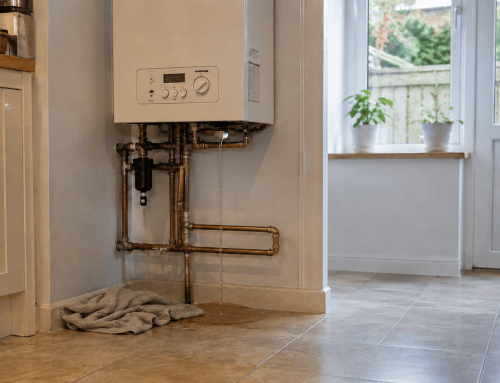
When the heat pump goes in, the gas boiler comes out. The gas supply to the boiler has to be safely capped by a Registered Gas Installer, which we look after as part of the installation.
From there you’ve two options. If you cook on a gas hob, you can keep your gas connection and carry on as normal, although you’ll still be paying the standing charge. If you’ve no more use for gas, you can close the account. To do that, contact your gas supplier, and they’ll arrange for Gas Networks Ireland to come out and disconnect the meter. The visit only takes about 45 minutes, and once it’s done there’s no more standing charge.
One thing to be aware of. The extra grant money for moving off gas, covered in the next section, is meant for homes that are actually replacing their boiler. If you were thinking of leaving the old boiler in place as a backup, talk to us before you apply, as it may affect the grants you can claim.
Grants for switching from a gas boiler
Moving off a gas boiler qualifies you for the full SEAI heat pump grant package. Since 6 October 2026, that comes to as much as €14,500 for a house, made up of the following:
| Grant | Amount (house) | What it covers |
|---|---|---|
| Heat pump system | €6,500 | The heat pump installation itself |
| Central heating upgrade | Up to €2,000 | New radiators, underfloor heating or pipework |
| Renewable Heat Bonus | €4,000 | Replacing an existing gas, oil, solid fuel or electric storage heating system |
| Boiler scrappage | €2,000 | Scrapping the old fossil fuel heating system (new from October 2026) |
| Total | Up to €14,500 |
On top of that, there’s €200 towards the technical assessment and €50 towards the BER that has to be done once the work is finished. The maximum amounts for apartments are lower.
There are a few rules you’ll need to follow. You must have grant approval from SEAI before any work starts; otherwise, you won’t qualify. The work has to be carried out by an SEAI-registered contractor. Once your grant offer comes through, you have eight months to get the work completed, have the post-works BER done and send back the paperwork. SEAI says payment usually takes four to six weeks after they receive everything.
Grant amounts and conditions change from time to time, so check seai.ie for the latest details before you apply.
What does it cost to switch?
A full air-to-water heat pump system from NRM typically costs between €23,000 and €45,000 before grants, including supply, fitting and VAT. The final figure depends mainly on the size of your house and how much radiator or underfloor heating work is needed. The price covers the heat pump, the cylinder, controls, installation and the new aluminium radiators or underfloor heating.
With up to €14,500 rebate available from SEAI, the amount you actually pay is a good deal lower. Because every house is different, we don’t give prices over the phone. Our on-site survey and quotation costs €250, and that amount is taken off the final price if you go ahead with the installation.
When it might not be the right time
We’d prefer to mention this now rather than after you’ve paid for anything. There are a few situations where a heat pump might not be the best move just yet.
If your house is poorly insulated and you aren’t able to deal with that first, you’re better off putting the money into insulation and coming back to the heating later. Occasionally there’s simply no space for a cylinder or an outdoor unit, though that’s uncommon and mostly happens in smaller apartments. And if your gas boiler is only a couple of years old and working fine, there’s no rush. You could start planning now, get the insulation done and make the switch when the boiler is closer to the end of its life.
None of these means a heat pump is ruled out for good. Usually it’s just a matter of getting the order right.
How the switch works with NRM
- Technical assessment. An SEAI-registered advisor assesses your home’s heat loss and lets you know if any insulation work needs to be done first. Homes built from 2007 onwards normally don’t need this.
- Phone call. Once your home is confirmed as suitable, we have a quick five-minute call about the house and what you need from the system.
- Survey and quote. We visit the house, measure each room, check where the cylinder and outdoor unit can go, look at the electrics and pipework, and send you a written quotation.
- Grant approval. You apply to SEAI using our registered contractor details. No work starts until your approval is in place.
- Installation. We fit the heat pump, cylinder, radiators or underfloor heating and controls, and remove the old gas boiler.
- Handover and paperwork. We show you how to use the system, the post-works BER is carried out, and the grant forms are completed and sent to SEAI.
We cover Dublin mostly. You’ll find more about what’s included in our packages on our Heat Pumps Ireland page, or you can get in touch and we’ll give you an honest view of where your house stands.
Replacing a gas boiler with a heat pump: quick FAQ
Can any house replace a gas boiler with a heat pump?
Most houses can, provided they hold their heat reasonably well. To qualify for the SEAI grant, the house needs a Heat Loss Indicator of 2.3 or lower and must have been built and occupied before 2021. Older houses often need some insulation work done first.
I have a combi boiler. Can I still get a heat pump?
Yes, you’ll just need space for a hot water cylinder, as a heat pump heats and stores water in a tank rather than heating it on demand. The hot press, a utility room or the space under the stairs are the usual options.
Do I have to replace all my radiators?
Not always, but most homes need at least a few changed, because radiators sized for a gas boiler give out less heat at the lower temperatures a heat pump runs at. Every NRM package includes aluminium radiators or underfloor heating sized for your home.
How much is the grant for replacing a gas boiler with a heat pump?
Since 6 October 2026, a house can get up to €14,500. That’s €6,500 for the heat pump, up to €2,000 for central heating upgrades, a €4,000 Renewable Heat Bonus and a €2,000 boiler scrappage grant. A separate €200 grant is available for the technical assessment.
Can I keep my gas hob?
Yes. The gas supply to the boiler is capped off, but you can keep your gas connection for cooking. You’ll continue to pay the gas standing charge.
Is a heat pump cheaper to run than gas?
That depends on how well your house is insulated, how well the system has been designed and which electricity tariff you’re on. In a well-insulated home with a correctly sized system, running costs compare well with gas, and if you close your gas account you save the standing charge too. People run into trouble with badly designed systems in draughty houses.
Wondering Can You Replace a System Boiler with a Combi Boiler – check out our latest guide for full details.




Leave A Comment