
Most homeowners don’t think much about boiler pressure — until it drops.
You top it up.
The heating comes back on, but the low boiler pressure may return.
Problem solved… for a while.
Then a week later, it’s low again, prompting a need to check the pressure.
If your boiler pressure keeps dropping, that’s not something to ignore — especially in winter. Repeated pressure loss is rarely random. It’s usually a sign that something in the heating system isn’t behaving the way it should.
This blog posts explains what’s normal, what isn’t, and when it’s time to stop topping up and start looking at the real cause.
Table of Contents
What Boiler Pressure Should Normally Be
On most modern systems, boiler pressure should sit between:
- 1.0 and 1.5 bar when cold
- Up to around 2.0 bar when heating is on
A small fluctuation between hot and cold is completely normal. Pressure rising slightly when the system heats up and falling back once it cools is expected.
What’s causing the boiler to lose pressure? not normal is:
- Pressure dropping below 1 bar regularly
- The boiler is losing pressure every few days
- Having to top up weekly or monthly
- Pressure falling to zero
If you’re frequently repressurising the system, something is causing water to escape or expand incorrectly.
Why Boiler Pressure Drops More in Winter
Winter exposes weaknesses in heating systems.
During cold weather:
- The system runs for longer periods
- More radiators are active
- Pipework expands and contracts more frequently
- Small weaknesses become more obvious in a central heating system.
A system that seemed “fine” in October can suddenly start losing pressure in January because it’s under greater strain.
That doesn’t mean it’s catastrophic — but it does mean it needs investigating.
NRM Plumbing Heating and Gas Boiler Replacement, 26 Glendoo Close, Walkinstown, Dublin 12. D12E7N9. Phone: +353 1 535 29 48. Mobile: +353 87 990 89 13
The Most Common Reasons Boiler Pressure Keeps Dropping
1. A Small Leak Somewhere in the System
This is the most common cause.
Leaks don’t always mean water pouring through ceilings. They can be:
- Tiny drips at radiator valves
- Seeping joints under floorboards
- Weeping pipe fittings
- Leaks at the boiler itself
Even a small, slow leak will reduce pressure over time.
If you’re topping up regularly, the central heating system is losing water somewhere — even if you can’t see it immediately.
Signs to look for:
- Damp patches near radiators are one of the most common signs of a leak.
- Staining around pipework
- A slight musty smell
- Bleeding radiators more often than usual
Hidden leaks under floors or in walls require professional inspection.
2. Faulty Expansion Vessel
The expansion vessel controls pressure changes as water heats and expands.
If it fails:
- Pressure rises too high when heating is on
- The pressure relief valve (PRV) may discharge water
- Pressure then drops once the system cools
This creates a repeating cycle:
- Pressure rises
- Boiler vents excess water
- Pressure drops
- You top it up
- It happens again, suggesting the boiler keeps losing pressure.
If your boiler pressure keeps dropping after heating cycles, the expansion vessel is a strong suspect.
3. Pressure Relief Valve (PRV) Discharging
When pressure gets too high, the PRV opens to protect the boiler.
Sometimes, a new boiler can help resolve persistent issues.
- It opens once and doesn’t reseal properly
- It starts discharging hot water intermittently.
- The external copper pipe outside the house drips
If you notice water coming from the small copper pipe outside (usually through an exterior wall), that’s often linked to pressure issues.
Once a PRV starts leaking, it usually needs replacing — not adjusting.
4. Filling Loop Problems
The filling loop is used to top up the system.
If:
- It’s left slightly open
- It isn’t sealing properly, which can lead to low boiler pressure.
- The valve is faulty
It can cause unstable pressure behaviour.
In some cases, incorrect filling procedures also lead to recurring drops.
5. Sludge or Internal Component Issues
In older systems, sludge build-up can cause the boiler to lose pressure.
- Affect circulation
- Cause pressure imbalance
- Stress internal boiler components
If the boiler is ageing, pressure loss can sometimes be a symptom of broader internal wear — particularly in systems that haven’t been serviced regularly.

When Topping Up Becomes a Problem
It’s important to understand this:
Topping up is not a fix.
Every time you repressurise:
- Fresh oxygenated water enters the system
- Corrosion risk increases
- Sludge formation accelerates
- Internal components experience stress
If you’re topping up more than occasionally, you’re masking the underlying fault — and potentially shortening the boiler’s lifespan.
That’s when a proper inspection becomes far more cost-effective than continuing to reset the symptom.
When It’s More Than Just a Repair
Sometimes pressure issues are isolated — a valve, a minor leak, an expansion vessel.
But in older systems, repeated pressure problems can indicate:
- Ageing pipework
- System design limitations
- Internal boiler wear
- Multiple small faults occurring together
At that stage, it’s worth asking a bigger question:
Is repair still the sensible route — or is the system reaching the point where replacement makes more financial sense?
Many homeowners only consider upgrading when the boiler fails completely. But persistent pressure issues can be an early warning sign that the system is under strain.
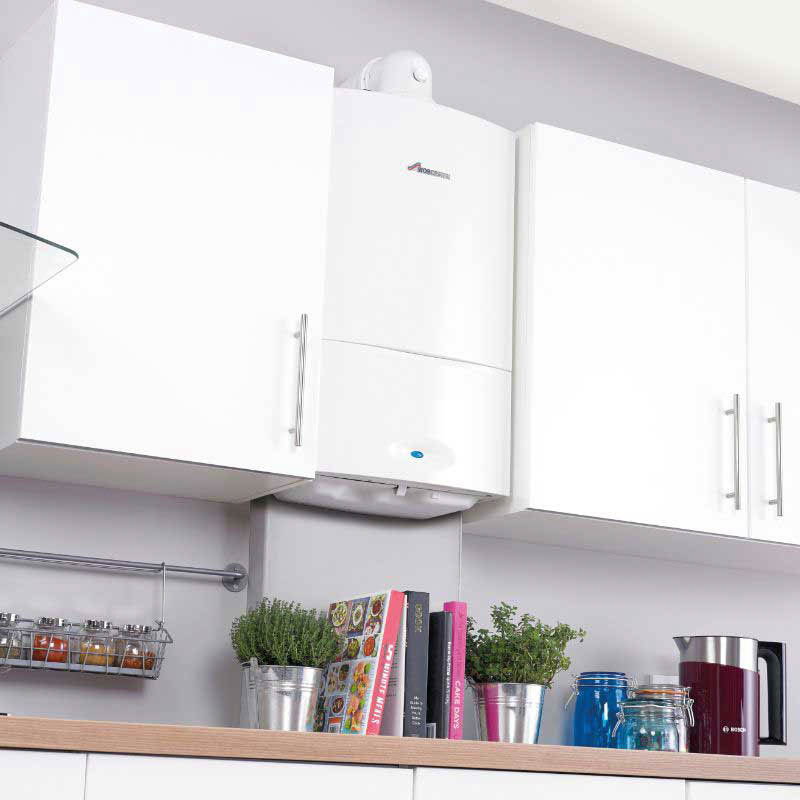
Modern, properly sized systems — including high-efficiency models from brands like Worcester Bosch or Viessmann — are designed to operate with stable pressure and improved internal controls.
If pressure problems keep returning, it’s worth reviewing the whole setup — not just the gauge.
Simple Checks You Can Do
Before calling a professional, you can:
- Check for visible leaks at radiators and valves
- Look at the pressure gauge when cold and when hot
- Inspect the external PRV discharge pipe for drips
- Make sure the filling loop is fully closed
If pressure drops quickly after topping up — or continues falling every few days — the issue requires proper diagnosis.
When to Call a Heating Professional
It’s time to book an inspection if:
- You’re topping up monthly or more
- Pressure falls to zero
- The boiler locks out repeatedly
- You see hot water discharging outside, indicating a potential issue with the boiler.
- Radiators need frequent bleeding, especially in a central heating system.
- The system is over 10–12 years old and unstable, indicating a need for a modern boiler.
Pressure loss is rarely “nothing.” It’s usually the system telling you something isn’t right.
The Bottom Line
If your boiler pressure keeps dropping, don’t treat it as routine maintenance.
A one-off top-up is normal.
Repeated top-ups are not.
The longer the underlying cause goes unchecked, the greater the strain on your heating system — and the higher the likelihood of a larger repair or unexpected breakdown during the coldest part of the year.
A proper inspection identifies whether you’re dealing with a minor fix or a system-level issue — and gives you clarity before the problem escalates.
Ignoring it won’t make it disappear.
And in winter, heating stability matters.
Related search terms: boiler pressure keeps dropping, boiler keeps losing pressure, boiler losing pressure, boiler constantly losing pressure, boiler pressure is low, low boiler pressure, boiler pressure problem, boiler pressure gauge, pressure gauge on your boiler, checking the pressure gauge, system pressure, pressure loss, loss of pressure, drop in pressure, dropping pressure, pressure has dropped, pressure to drop, pressure regularly, boiler has lost pressure, boiler is still losing pressure, boiler pressure is too low, increase the boiler pressure, reduce boiler pressure, reduce the pressure, enough pressure, pressure back, pressure inside, faulty pressure, pressure won’t stay up, boiler lose pressure due to leak, causes of boiler pressure loss, common causes of boiler pressure loss, leak in the system, boiler leaks, leak around the boiler, central heating water leak, water from the central heating, water into the system, released from your central heating, heating system pressure, boiler and heating system, boiler system, gas boiler pressure problem, new gas boiler pressure issues, boiler replacement Dublin, gas boiler replacement Dublin, Worcester Bosch boiler pressure issue, Viessmann boiler pressure issue, gas safe engineer, boiler engineer Dublin, central heating specialist Dublin, inspect your boiler, check if your boiler pressure is low, check the pressure gauge, see the pressure gauge, boiler operates under pressure, damage to your boiler, parts inside the boiler, fault with the boiler, boiler heats but loses pressure, heating or hot water pressure problem, heating is running pressure drops, radiator leak causing pressure loss, boiler keeps dropping pressure in winter, boiler pressure dropping overnight, boiler pressure drops when heating is on, boiler pressure drops when off, pressure relief valve leaking, expansion vessel fault, filling loop problem, sealed heating system pressure loss, central heating system losing pressure Ireland
Leave A Comment