


There’s a question we get more than almost any other, usually before anyone’s ready to talk money or models.
“Is my house even suitable for a heat pump?”
It’s the right question to ask, and it’s the one worth answering honestly before you spend a cent on a survey. Because here’s the truth of it: a heat pump is a brilliant bit of kit in the right house, and a source of complaints in the wrong one (More info on: Is a Geothermal Heat Pump Right for Your Dublin Home?). The difference is rarely the heat pump. It’s the house around it.
So instead of guessing, or booking a survey and hoping, run through the checklist below. It won’t replace a proper technical assessment, but it’ll tell you fairly quickly whether you’re a strong candidate, a “needs a bit of work first” case, or someone who’d be better sorting a few things before going near an installer.
The short version, before you read on…
A house is a good fit for a heat pump when it does three things well: holds its heat, spreads that heat around at a low temperature, and has the space and supply to run the unit sensibly. Nail those three and you’re most of the way there.
Everything below is just the detail behind those three points.
1. Can your house hold onto heat? (the big one)
First off, let’s get the most important factor out of the way – insulation.
A heat pump does not pump out heat like an oil or gas boiler, instead it delivers a gentle, consistent flow of warm air at a lower temperature and continues to supply air at this temperature until the required temperature is reached. Therefore a house that retains heat well is ideal to operate a heat pump whilst a house that leaks heat from the attic, walls and gaps around windows will be difficult to operate efficiently.
To qualify for grant aid for a heat pump in Ireland, your home needs a Heat Loss Indicator (HLI) of 2.3 or lower — SEAI’s way of measuring whether a house is well insulated and holds its heat.
Ask yourself honestly:
- Is the attic space well insulated, perhaps just with thin layers of insulation installed years ago?
- Are the walls filled with insulation (cavity fill), filled with insulation internally (within the wall space), or filled with insulation externally (insulation on the outside of the wall)?
- Are your windows double glazed, triple glazed or single pane and rattly?
- Is your home currently quite draughty or does it hold warmth for a reasonable period after you turn off the heating?
Many older homes still require work to bring them up to the required standard of insulation. It is more than common for many homes in Ireland to need some degree of insulation work before a heat pump can be cost-effectively installed. The fact that some work may be required does not necessarily mean that your home will not be suitable for a heat pump, but rather that some work will need to be carried out as a precursor to installation.
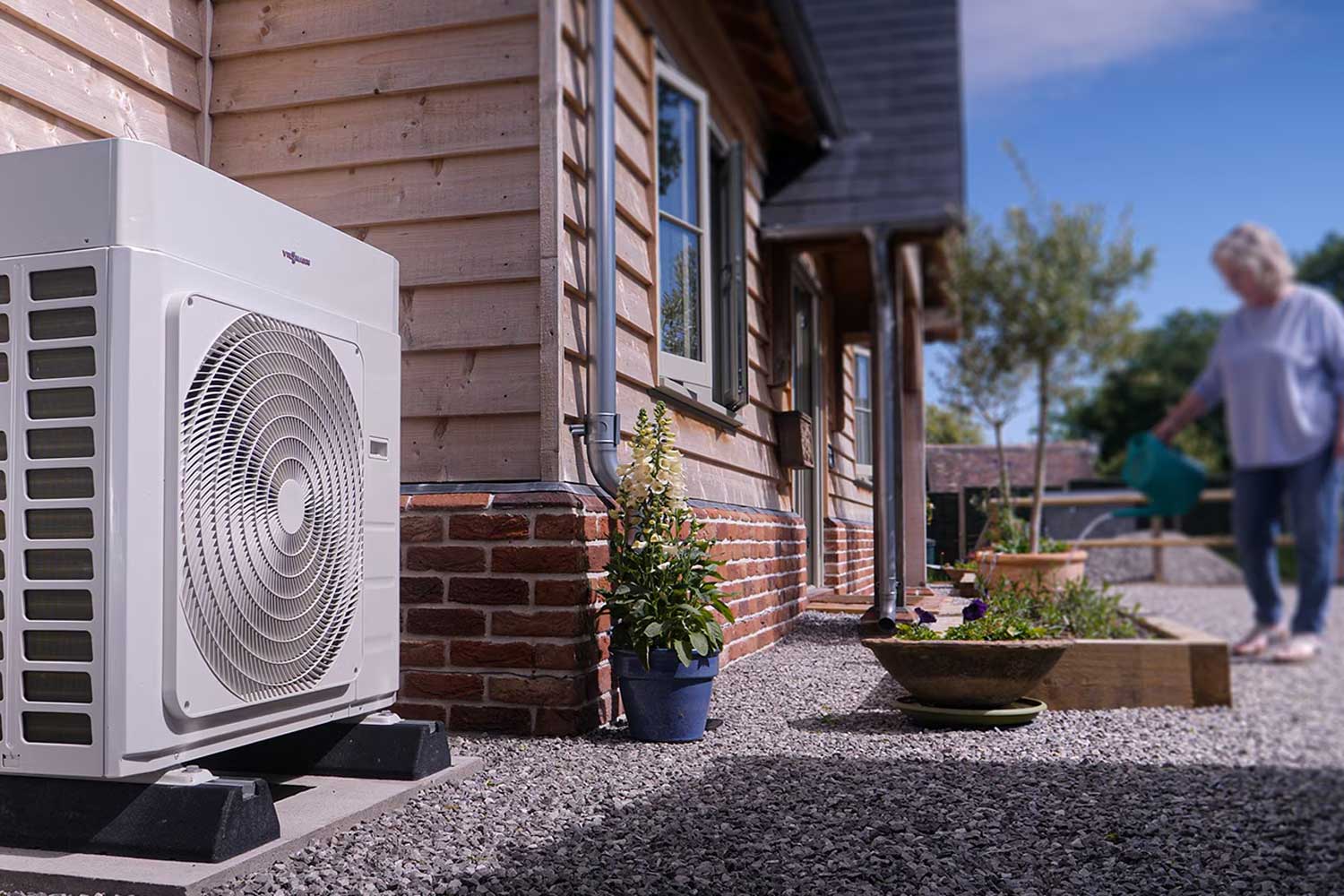
Image credit: https://www.viessmann.co.uk/
2. How is the heat delivered around the house?
Because a heat pump runs at a lower water temperature, it needs emitters that can put out enough warmth at that lower temperature. Small, old radiators sized for a hot boiler can fall short.
That doesn’t automatically mean tearing out every radiator — that myth needs to die. Whether your existing rads work depends on their size, the heat demand of each room and how well insulated the house is. Some setups are grand. Some need a handful of upgrades. Some need more.
At NRM Plumbing and Heating, we fit aluminium radiators or underfloor heating as part of every package precisely because they perform well at the lower flow temperatures a heat pump uses. So you don’t need to solve this one yourself before ringing us — but it’s worth knowing your current radiators may not be the final setup.
Quick self-check: do your rooms actually get warm enough on your current heating, or is the house always a bit cool even with the boiler flat out? A house that already struggles to heat is telling you something about its insulation and emitters both.
3. Is there a hot water cylinder — and is it any good?
Here’s one that catches out anyone coming from a combi boiler.
A heat pump doesn’t heat water on demand the way a combi does. It works alongside a hot water cylinder. If you already have a cylinder, the questions are: is it big enough, is it well insulated, and is it suited to how a heat pump heats water (More info on: Heat Pumps 101 – Air to Water Heat Pumps – Your Guide) ? In a lot of older homes the answer is no — the cylinder is undersized or well past its best.
That’s often why a hot water cylinder replacement becomes part of the job. It’s not a reason to worry, just a part of treating the heating as one whole system rather than swapping a single box.
If you’re on a combi with no cylinder and no obvious airing cupboard or space for one, note that — it’s worth flagging early, because the system will need somewhere for the cylinder to live.
4. Is there somewhere sensible to put the outdoor unit?
Modern air-to-water heat pumps come in a fairly large outdoor unit roughly the size of a large air-conditioning unit; they require:
- Air must be able to circulate around it — so avoid situating it in a small solid area (ie: a box) as this may damage the fan etc.
- A reasonable run to where the cylinder & controls will be.
- A position where the noise of the pump will not be a problem, i.e. not directly under a bedroom window or too close to the boundary with a neighbour over a wall.
Most modern air-to-water heat pumps are very quiet, so this is not normally a problem, but that does not mean you can put it anywhere. The obvious place for an air-to-water outdoor unit is down the side of a house or at the back, but if you have a mid-terrace house with no side access and a very small garden then an air-to-water is not for you. (However, it is not impossible to find a place and it is worth looking into this option now rather than ruling it out completely).
Planning permission is generally not required for an outdoor air handler used in a domestic property. Typically there are certain restrictions around boundary distances, but a site survey confirms this is acceptable for your property.
5. Your electricity supply and meter
Two small things people forget.
You will need your MPRN (meter point reference number) from your electricity bill, which is included in the grant application for your occupied home.
Heat pumps consume electricity, so as part of the installation there will be some electrical work required to connect up the unit to your existing supply. In most homes this is relatively straightforward, but older homes or homes with very overloaded consumer units may require further work.
6. The age of the house (and what it means for the grant)
Heat pumps are used to heat many older homes throughout the country, provided the home has been properly insulated.
For the SEAI grant, there is a rule that your home must have been built and occupied before 2021. This is the criteria for the retrofit grant for homes. Homes built and completed after 2021 are typically built to heat-pump-ready standards and are outside of the scope of this grant.
So “is my house too old” for suitability is almost a non-issue. Older houses are who the SEAI retrofit grant is trying to target for a heat pump retrofit.
What actually decides it: the technical assessment
All of the above was you guessing your home’s potential. It is only when an SEAI-registered energy auditor carries out a technical assessment of your home that you will actually know whether your home meets the HLI of 2.3 or lower required to qualify for the grant (unless you already have a valid BER assessment).
There is also a €200 grant available towards the cost of the assessment. So, essentially, the check will cost very little. It’s smart to get the assessment done early in the process — you’ll then have a solid basis for deciding whether or not you’ll qualify for a grant. That’s, “yes, we’ll qualify” or “no, we’ll need to do something first”.
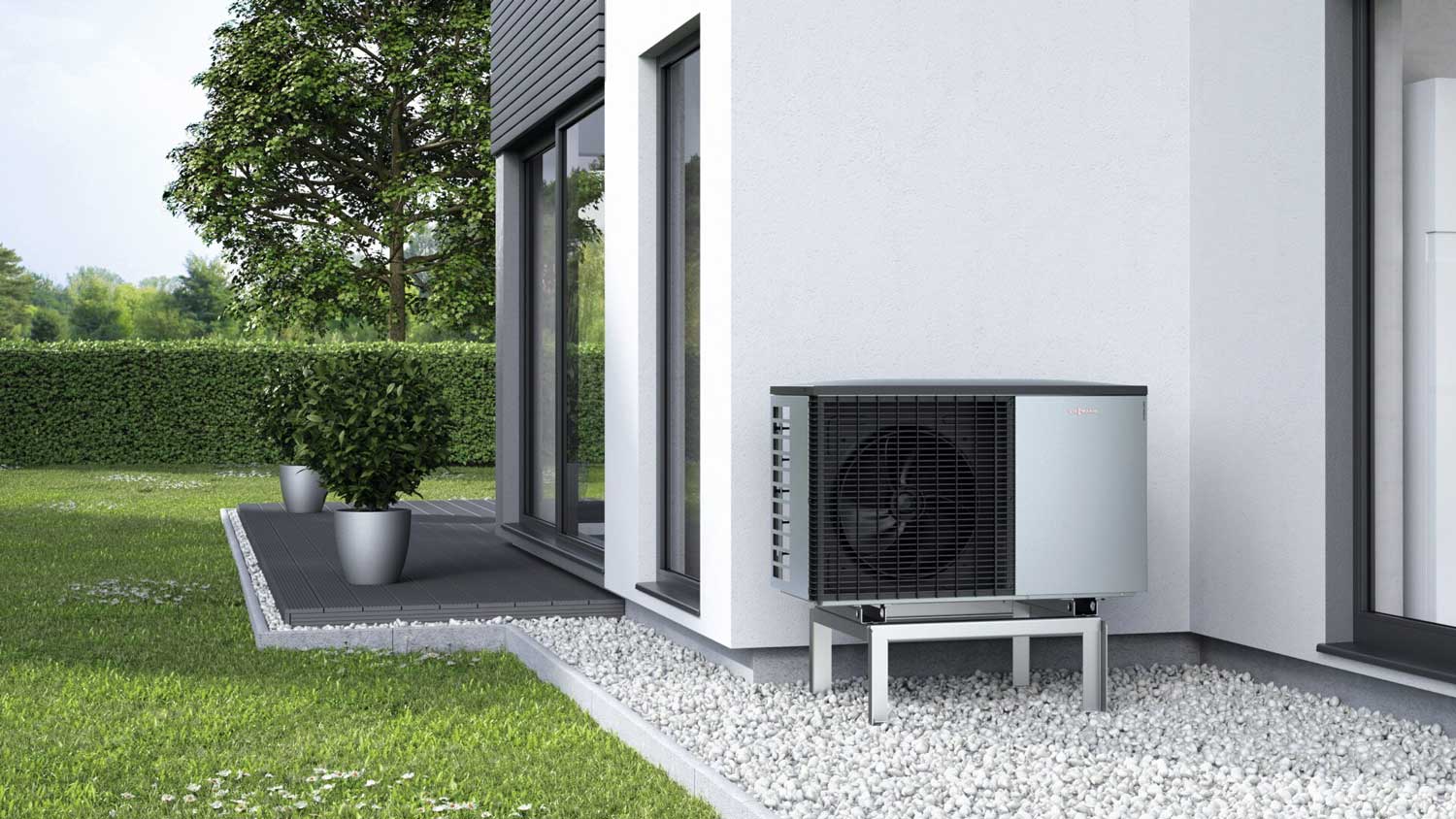
Image credit: https://www.viessmann.co.uk/
Homes people wrongly rule themselves out of
There are houses that people incorrectly rule themselves out of receiving a payment for upgrading.
- 1970s and 80s semis and detached homes with the insulation brought up to scratch
- Older terraces that have had attic and wall insulation done over the years
- Country homes people assume are “too big and draughty” that actually hold heat fine once assessed
Even if you have told yourself that your home is unlikely to qualify, you might be pleasantly surprised.
Homes that look fine on paper but aren’t (yet)
And on the other hand, a few that look ideal need more than expected:
- Large houses with good finishings, but original single-glazed windows and poor insulation.
- Extensions and conversions that have not been brought up to the same insulation standard as the main house.
- Old tiny radiators of inadequate size for the very powerful boiler they were connected to.
None of these scenarios are write-off jobs, they just need the fabric to be sorted out first — and it’s far better to discover that early on in the process rather than halfway through the installation.
So — is your house suitable for a heat pump?
You’re very likely a strong candidate if:
- You hold heat well in your home — e.g. warm upstairs, warm enough on a cold day, not too hot in summer.
- There are suitable emitters for a heat pump already installed in your home, or space to add them.
- There’s space large enough to fit a heat pump cylinder and outdoor unit.
- Your home was built before 2021.
In these instances, you will likely find that most of the cost of installing a heat pump can be offset by up to €12,500 in SEAI grants.
But even if a few of the criteria above don’t fit for you, it’s not a no. Instead, you’re a ‘sort the insulation out first & then go’ case.
Whether your home ticks all the boxes or falls short in a few areas, an accurate technical assessment is the first step for anyone interested in heat pumps. The assessment will highlight any shortcomings that need to be addressed and provide you with a clear understanding of what is required. Our Heat Pumps Ireland team will then confirm suitability and detail the SEAI grant for you. We will also put together a detailed plan for your home and advise on the most suitable products for your needs.
Is my house suitable for a heat pump? Quick FAQ
Can an old house have a heat pump?
Older homes are perfectly suited to have a heat pump installed. Unlike air conditioning, heat pumps can draw warm air from outside even on a cold day, and so the age of a home is less relevant than ensuring the home is suitably insulated to hold warm air. An assessment of the attic, walls and windows is usually sufficient to confirm suitability.
What makes a house unsuitable for a heat pump?
The typical reasons for a house not being suitable for a heat pump would be poor levels of insulation and high levels of heat loss from the house. In many cases with older houses, sufficient insulation can be retrofitted, and in many cases it is cost-effective to do so prior to the installation of a heat pump. In these cases it may even be cost-effective to complete the required insulation work before applying for a grant, as it will likely meet or even exceed the required SEAI HLI threshold of 2.3.
Do I have to throw away all of my radiators?
No. That would be daft. In fact, we usually size aluminium radiators and include underfloor heating in all of our NRM packages. That way they work correctly at lower temperatures.
How do I know for sure if my house is suitable?
A technical assessment by an SEAI-registered installer will highlight your house’s Heat Loss Indicator and whether you are eligible for a grant. There is a €200 grant available to get your home assessed. Your home must have been built and be occupied before 2021 to qualify for the grant for a heat pump.
Do I need space for a heat pump?
Yes — space outside your home with good airflow for the air source heat pump unit, and space inside your home for a hot water cylinder, which can usually be found in many homes. A survey of your home will confirm the space required.
Ever wondered if…. Is My House Suitable for a Heat Pump ? Check out our latest blog post for details.
Looking for Heat Pump Running Cost Calculator….check out our blog post for details!