


If you’re considering installing a heat pump, one of the first questions you’ll probably ask is:
“How much will it cost to run?”
It’s a sensible question—but it’s also one of the hardest to answer with a single figure.
The running cost of a heat pump depends on several factors, including the size of your home, how well it’s insulated, your hot water usage, your electricity tariff and how efficiently the system has been designed and installed.
That’s why we’ve created our Heat Pump Running Cost Calculator for Ireland. It gives you an estimated annual and monthly running cost based on your home’s characteristics, helping you understand what you might expect before arranging a professional assessment.
Table of Contents
- Use Our Heat Pump Running Cost Calculator
- How Much Does It Cost to Run a Heat Pump in Ireland?
- What Affects Heat Pump Running Costs?
- Understanding Your Calculator Results
- Are Heat Pumps Cheaper to Run Than Oil or Gas?
- How Can You Reduce Heat Pump Running Costs?
- Frequently Asked Questions
- Thinking About Installing a Heat Pump?
Heat Pump Running Cost Calculator
Estimate what a heat pump might cost to run in your home each year. The result is an indicative estimate only — not a quotation, BER assessment or heat-loss calculation.
Estimated annual running cost
— —| Heating your home | — |
|---|---|
| Heating your hot water | — |
| System overhead (pumps, defrost, controls) | — |
Monthly costs will not be evenly distributed. Electricity use is normally much higher during colder winter months and lower during summer.
Because the insulation level was set to “Not sure”, a middle-range assumption was used and this estimate may be less accurate.
Indicative comparison with your current heating
Comparisons are broad estimates only. They use assumed fuel prices and boiler efficiencies, exclude standing charges, boiler servicing and maintenance, and will not reflect your actual bills. Fuel prices change frequently — always compare against your own recent bills.
What has the biggest impact on your running costs?
What this means for a home like yours
How this estimate was calculated
The calculator uses a simplified annual energy model:
- Space heating: floor area × an assumed annual heat demand per m², based mainly on the insulation level you selected — refined by your BER if you provided one — with small adjustments for property type and age. The low and high values of the assumed range produce the result range shown.
- Hot water: number of occupants × an assumed annual hot-water energy demand per person, converted to electricity using a separate hot-water efficiency figure (hot-water production usually runs at a lower efficiency than space heating).
- Electricity: space-heating demand ÷ the SCOP you selected, plus hot-water electricity, plus a small percentage overhead for circulation pumps, defrost cycles, controls and distribution losses.
- Cost: total electricity × your unit price. Annual costs are rounded to the nearest €25 and electricity to the nearest 100 kWh, because a tighter figure would suggest more precision than an online estimate can offer.
It does not carry out a room-by-room heat-loss calculation, and it does not account for your specific radiators, flow temperatures, controls, tariff structure or weather in your part of the country.
Could Your Home Be Suitable for a Heat Pump?
Running cost is only one part of the decision. Insulation, heat loss, radiators, hot-water requirements and system design all affect performance.
Enter a few details about your home to receive an estimated annual running cost, monthly cost and electricity consumption. The calculator also explains the main factors influencing your results, so you can better understand where your estimate comes from.
Please note: This calculator provides an indicative estimate only. A professional heat loss assessment is always required before specifying or installing a heat pump.
How Much Does It Cost to Run a Heat Pump in Ireland?
There isn’t a one-size-fits-all answer.
A modern, well-insulated home may cost significantly less to heat than an older property with higher heat loss, even if they’re a similar size. Likewise, two neighbouring homes can have very different running costs depending on how they’re heated, the temperatures they’re set to and how much hot water is used.
Rather than relying on average figures you find online, it’s more useful to estimate running costs based on your own home. That’s exactly what our calculator is designed to do.
What Affects Heat Pump Running Costs?
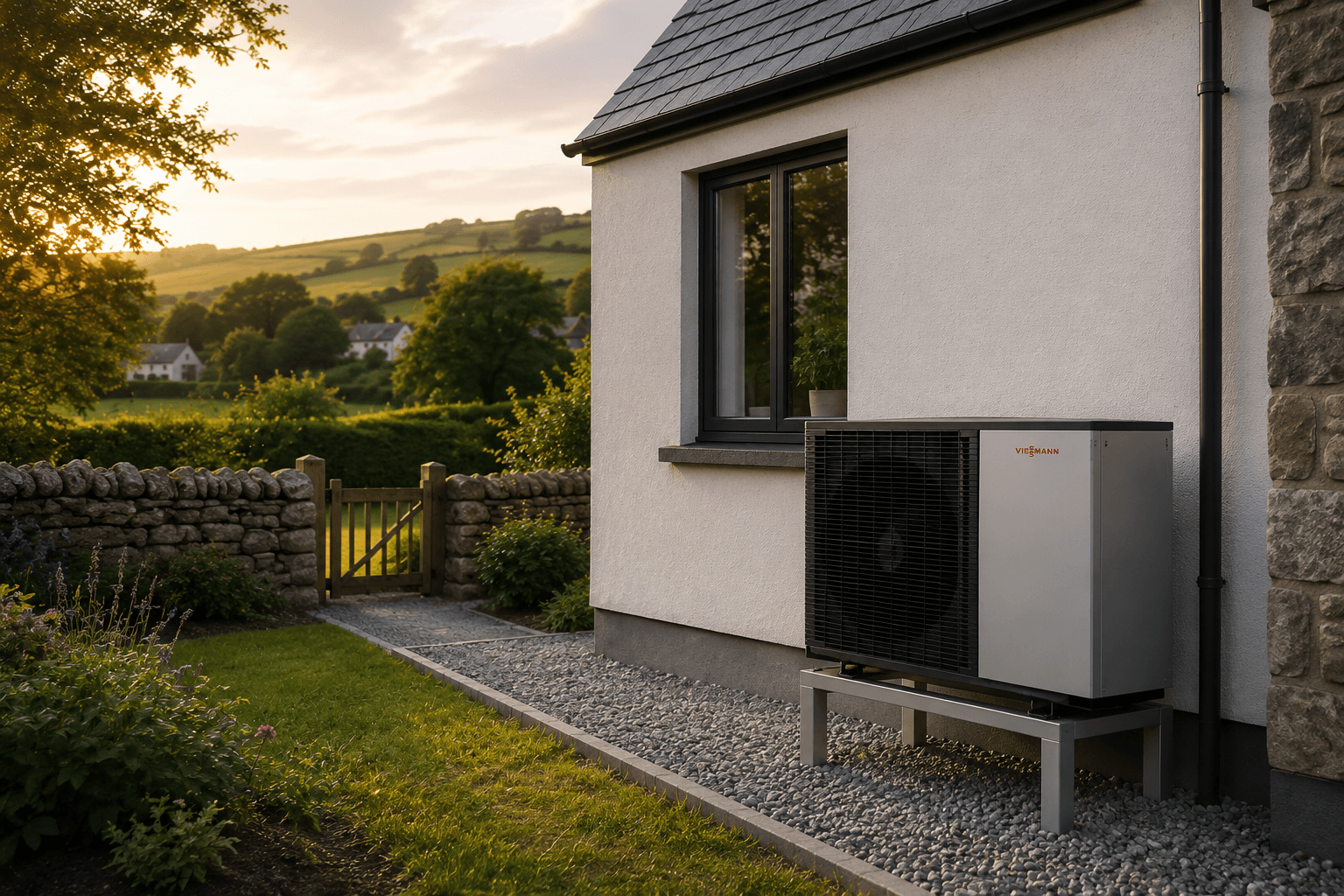
Several factors influence how much electricity a heat pump uses throughout the year.
Insulation
Good insulation is one of the biggest factors affecting running costs.
A home that retains heat well requires less energy to maintain a comfortable indoor temperature. If heat escapes quickly through walls, roofs, windows or draughts, the heat pump has to work harder and for longer.
Improving insulation won’t just benefit a heat pump—it can reduce heating costs regardless of the heating system you use.
Property Size
Larger homes generally require more heat than smaller homes because there’s more space to warm.
However, size isn’t everything. A compact older home with poor insulation may require more energy than a larger modern home built to higher energy standards.
Building Performance
You may know your home’s BER (Building Energy Rating) – this will give you an indication of your home’s energy performance.
For houses with a high BER it will require less energy to warm up the house than a house with a lower BER rating, however, every house is different and a full assessment is required before purchasing a heating system.
Hot Water Usage
When working out the annual running cost of your home’s heating systems we also need to calculate the running cost for the hot water supply to your home.
The larger the household, the more hot water will be used. This, in turn, will mean that more energy will be consumed for heating the water regardless of the type of heating system used.
Heat Pump Efficiency
Heat pumps don’t generate heat by burning fuel in the same way that a gas or oil boiler does. Instead, they extract heat from outside and transfer it to the air inside your home.
A typical measure of the efficiency of a heat pump is the Seasonal Coefficient of Performance (SCOP), which for a well-designed system operating efficiently could be between 3.5 and 5.6. This means that for each unit of electricity used by the heat pump, between 3.5 and 5.6 units of heat are produced for use by the building.
The performance of a heat pump will also be influenced by the system design, controls and correct sizing of the system.
Electricity Tariff
The price you pay for electricity will influence your running costs.
It will also take into account whether you’re on a smart tariff, a night-rate tariff or a simple day rate. You can enter the actual cost of electricity for your home.
Understanding Your Calculator Results
After you’ve completed the heat pump cost calculator, you can expect to see a number of estimated costs presented to you, including:
- Estimated annual running cost
- Estimated monthly running cost
- Estimated annual electricity consumption
- A breakdown between space heating and hot water
You will also receive guidance about the results of your calculations.
Please remember that these costs are only estimates and actual costs can vary based on a number of factors such as weather, internal temperatures, number of people in the household, the cost of electricity, to name a few and how the heating system is used throughout the year.
The calculator gives a realistic indication of the performance of your current heating system, rather than a precise heat loss calculation.
Are Heat Pumps Cheaper to Run Than Oil or Gas?
Are Heat Pumps Cheaper to Run Than Oil or Gas Heating?
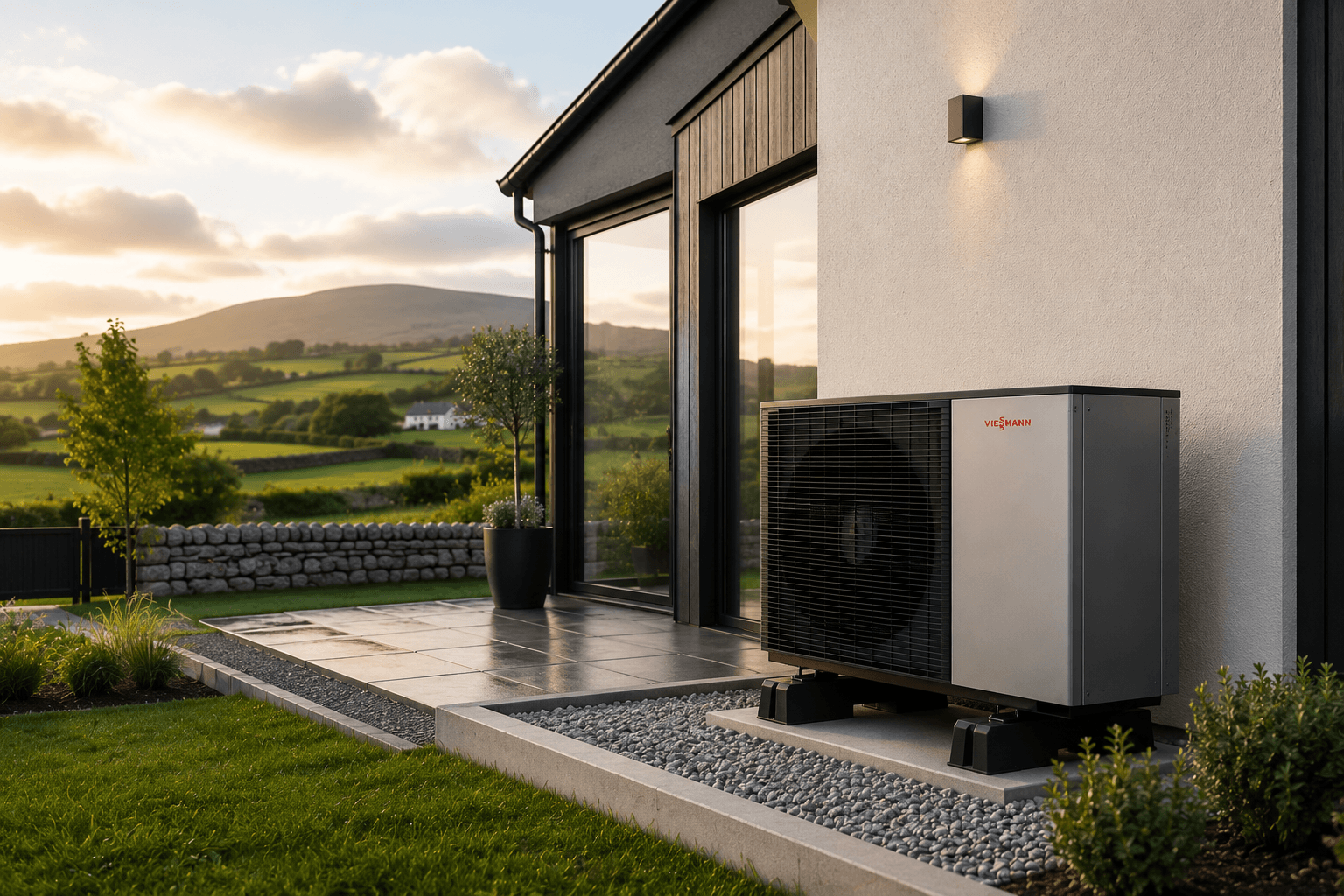
The honest answer is it depends.
It has to be said that some homes have higher heat loss than others, and even well-designed heat pumps can not compete in terms of cost when compared to well-designed oil or gas systems for these homes. Also, a heat pump system that has been poorly designed and installed can end up being even more expensive to run than a comparable oil or gas system.
Fuel price is only part of the equation, but it is by no means the only factor influencing running costs. Important factors that will affect the running costs of your new heating system are the condition of your property, levels of insulation, the quality of your heating controls and the efficiency of your new system.
Our calculator gives you an approximate comparison to other types of heating. This should also be treated with caution and is only an indication of running costs.
How Can You Reduce Heat Pump Running Costs?
So as to reduce the running costs of your heat pump there are a number of steps that you can take to increase efficiency.
- Improve insulation where practical to reduce heat loss.
- Use your heating controls effectively. Don’t keep turning the heating up and the temperature up and down.
- Maintain a constant indoor temperature – fluctuating between on and off heating is one of the biggest ways of losing money from your heating system.
- Choose an electricity tariff that suits your household usage.
- Proper design, commissioning and servicing of your heating systems.
- Ensure the heat pump is of the correct size for your home. Having a professional perform a heat loss assessment and design of the system is crucial to achieve optimum efficiency.
Frequently Asked Questions
Do heat pumps use a lot of electricity?
Heat pumps use electricity to transfer heat from outside to inside. However, they can deliver several units of heat for every unit of electricity that they use. This is why they are such efficient systems of heating.
Are heat pumps expensive to run during winter?
During the Winter months, as heating demand is at its highest, electricity usage will naturally increase. However, a system that has been designed and installed correctly will continue to run efficiently throughout the heating season.
Are heat pumps suitable for older homes?
Yes, many older homes can be supplied with heat pumps. The deciding factor is whether your home has sufficient heat loss, suitable levels of insulation and whether the design of your heat pump system is suitable for your home.
Is the calculator accurate?
The calculator gives an estimate based on the given information and usual engineering assumptions.
It’s only a rough estimate and should not be used instead of a full professional survey and heat loss assessment to determine whether a heat pump is suitable and to ensure the correct design and specification.
Thinking About Installing a Heat Pump?
However, there is more to running costs than a first glance would suggest.
It’s also worth remembering that the upfront cost of a heat pump can be reduced through the heat pump grants available in Ireland, provided your home qualifies.
When looking to install a heat pump it is useful to have a professional come and do a survey of your home. This will allow them to complete a full heat loss assessment and take into account items such as insulation, radiators, hot water demands and your current heating habits. They can then design and recommend a suitable system for your home.
If you’re thinking of making the change and need advice, help choosing the right system for your home or a survey to determine whether a heat pump will work for you, then NRM Plumbing & Heating are here to help.
If you think a heat pump may be right for your home, then NRM Plumbing & Heating can carry out a heat pump assessment for your home. We can also provide advice on the suitability of a heat pump for your home and recommend alternative solutions if required. Please contact us for further information and to arrange an assessment.








Leave A Comment